

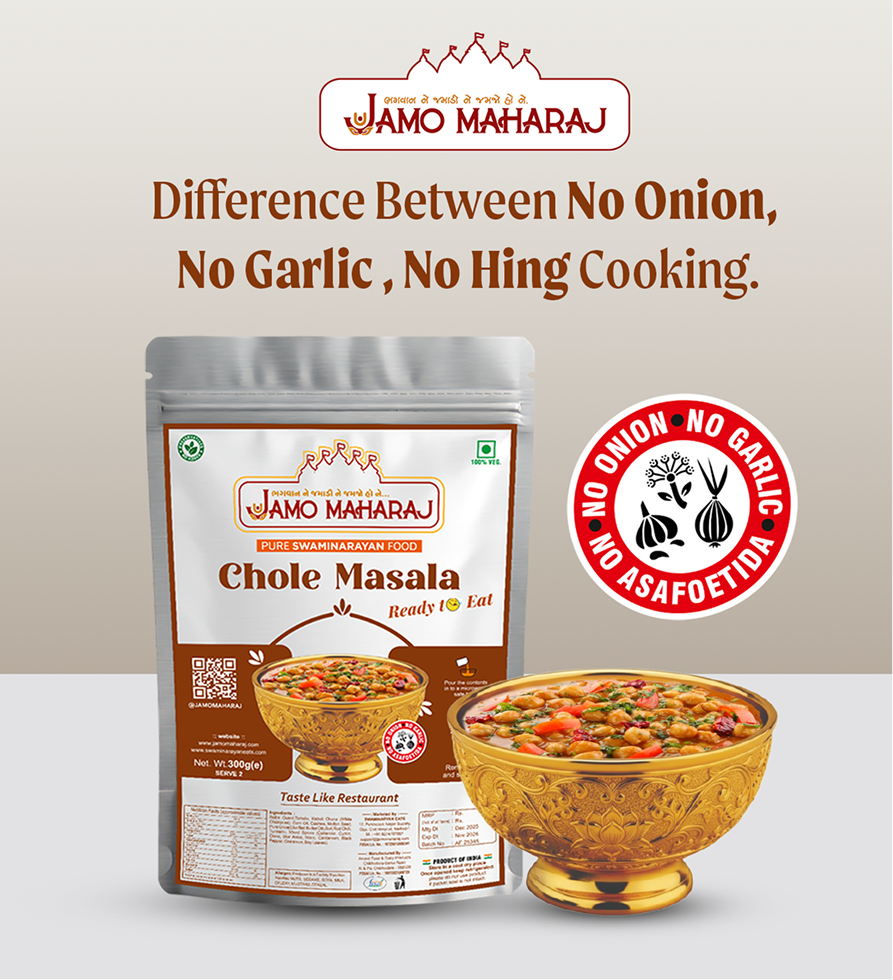
In many traditional Indian food practices, especially in Satvik and spiritual diets, you’ll often hear the phrase “No Onion, No Garlic, No Hing.” But what does it really mean? Why are these ingredients avoided, and how does food taste without them? Let’s understand the difference, purpose, and benefits of this unique way of eating.
What Does “No Onion” Mean?
“No Onion” simply means excluding onions from food preparation in any form—raw, cooked, fried, or powdered.
Onions are considered tamasic in nature, meaning they are believed to increase restlessness, aggression, and heaviness in the mind. In Satvik and Swaminarayan food traditions, onions are avoided to maintain mental calmness, purity, and spiritual focus.
Even though onions are commonly used for flavour, Satvik cooking replaces them with:
- Fresh vegetables
- Natural sweetness from tomatoes
- Gentle spices and herbs
What Does “No Garlic” Mean?
“No Garlic” refers to avoiding garlic completely, including garlic paste, powder, or extracts.
Garlic is known for its strong aroma and stimulating properties. While it may have medicinal uses, it is considered rajasic-tamasic, which can increase passion and agitation. For those following a Satvik lifestyle, garlic is excluded to help keep the mind balanced, peaceful, and disciplined.
Instead, flavour is enhanced using:
- Ginger (in moderation)
- Jeera (cumin)
- Dhaniya (coriander)
- Fresh herbs
What Does “No Hing” Mean?
Hing (asafoetida) is often used as a substitute for onion and garlic in vegetarian cooking. However, in pure Swaminarayan and strict Satvik food, even hing is avoided.
Why?
Traditional hing contains traces of onion resin, making it unsuitable for those following strict no-onion, no-garlic rules. Avoiding hing ensures absolute purity and adherence to spiritual dietary principles.
How Does Food Taste Without These Ingredients?
A common misconception is that food without onion, garlic, and hing is bland. In reality, such food focuses on natural flavours, freshness, and balance.
Taste is enhanced using:
- Seasonal vegetables
- Whole spices
- Ghee and natural oils
- Proper cooking techniques
The result is food that feels lighter, cleaner, and easier to digest.
Final Thoughts
No Onion, No Garlic, No Hing is not just about removing ingredients—it’s about embracing purity, simplicity, and mindful nourishment. This way of cooking respects tradition, supports mental peace, and offers a wholesome approach to everyday meals.
When food is prepared with purity and intention, it doesn’t just feed the body—it nourishes the soul.

